
From the Beast of New York to Schindler’s Redemption, Beauty is in seeing with the eyes of the soul.
The world demands quick answers and preaches superficial perfection. Two archetypes, one from fantasy and the other from history, remind us that true beauty lies in the courage to love the invisible, to protect the different, and to surrender to the humanity that dwells even in the shadows.
Vincent and Catherine: Love Born in the Bowels of the Earth
New York, the 1980s. Beneath the skyscrapers and asphalt, there existed a kingdom of forgotten tunnels. And in them lived Vincent a man with the face of a beast and the heart of a poet. Rejected by the world above, he was the personification of what society calls “imperfect.”
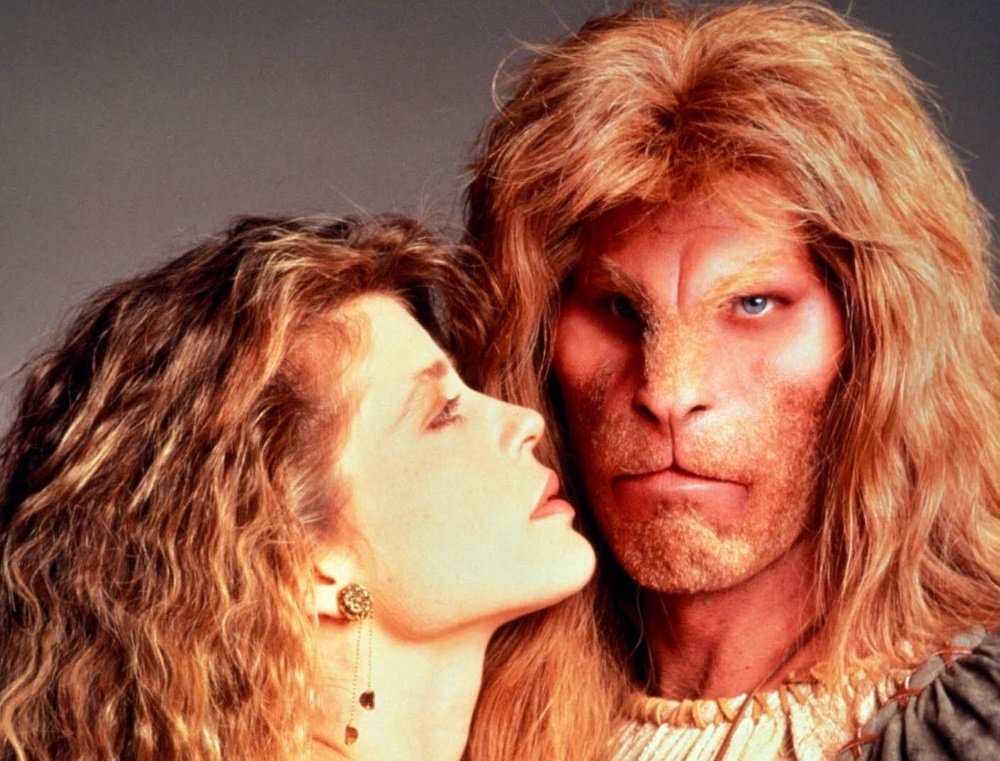
Until Catherine Chandler a wounded woman, but full of light crossed his path. She didn’t see a monster. She saw a protector. A man who quoted Blake and Wordsworth, who felt the pain of others as his own. Their love was not born from appearance, but from the resonance between two broken souls.
“She didn’t love the Beast. She loved Vincent. And he didn’t love the unattainable princess. He loved the real Catherine the strong person, vulnerable, and profoundly human.”
Much like Kintsugi, Vincent was more beautiful for his cracks. His claws were not a flaw; they were the gold that fused the man to the myth. And Catherine, with her own scars, knew how to see that.
Oskar Schindler: The Man Who Got Lost to Find Himself
Real history gave us another brutally beautiful example. Oskar Schindler, an ambitious German, initially saw the Jewish people as pieces in a game, tools for his success. He wore the mask of the oppressor because it was profitable. On the outside, he was hard, calculating, “perfect” for the system.
But then, something cracked inside him.
Just as Catherine saw Vincent, Schindler began to see beyond the uniform, the star, the fear. He saw the violinist who played Mozart, the rabbi who whispered prayers, the mother protecting her child. Their humanity awakened his dormant humanity.
His transformation was not from hero to saint. It was from man to human. He spent his entire fortune not out of grandeur, but because he could no longer bear the idea of not acting. His redemption came from recognizing the other and thus, himself.
The Parallel: Seeing with the Eyes of the Soul
Both Vincent and Schindler were strangers in their own worlds.
One, for being too human beneath a beast’s appearance.
The other, for being too human beneath a mask of indifference.
And both were saved by those who truly saw them:
- Catherine saw the beauty in the Beast.
- Schindler’s Jews saw the goodness in the German.
And this leads us to the most important question:
How many times have we failed to love, to help, to connect because we judged the cover and not the book?
The Call: Let Us All Be Catherines and Schindlers
The lesson is clear and urgent:
- Stop looking in the mirror. Start looking out the window.
- True connection lies in seeing the other without fear.
- Embrace your own beasts.
- Your imperfections are what make you capable of loving beyond the surface.
- Allow yourself to be transformed by the other.
- Like Schindler, let the humanity of others change your worldview.
Love is not blind.
On the contrary: it is the only thing that makes us see.
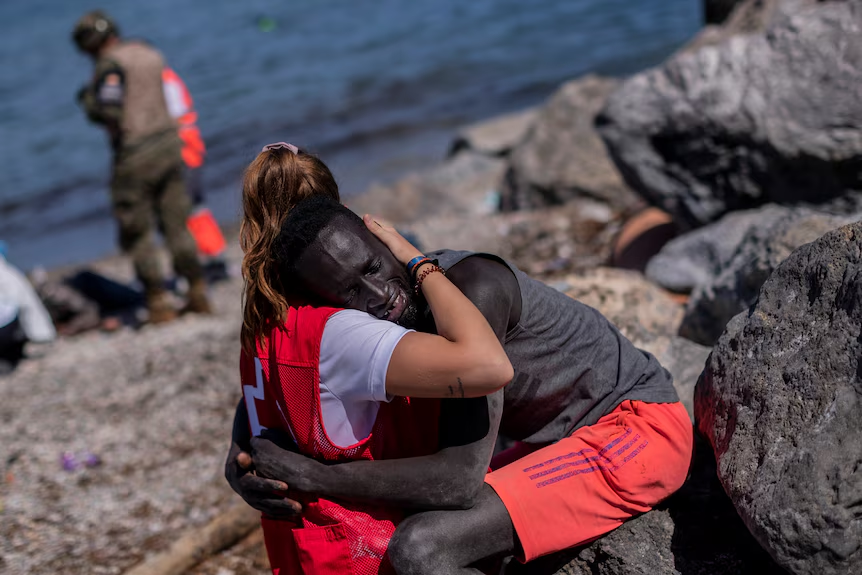
A New Fairy Tale for Adults
We don’t need perfect endings. We need true endings.
Like the love of Vincent and Catherine forbidden, painful, but eternal.
Like Schindler’s redemption imperfect, but full of meaning.
May we honor these stories not by placing them on a pedestal, but by living them.
Loving the different. Protecting the vulnerable. And never, ever underestimating the power of a single act of courage.
Because in the end, we all carry both a beast and an angel within us. The question is: which one do you choose to feed?