
By Éden António
The Hidden Room: How a Watchmaker’s Legacy Redefines a Life of Impact
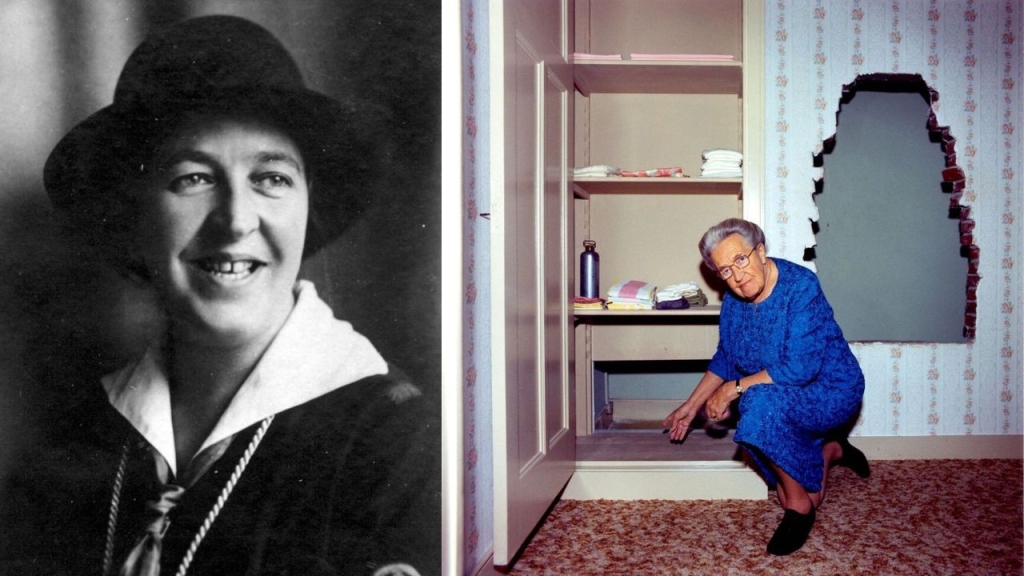
The aroma of old wood, oil, and time hangs in the air of the ten Boom house in Haarlem. In the front room, a watchmaker’s bench sits, its surface worn smooth by generations of careful hands. To a casual visitor, it speaks of a quiet, ordered trade. But in this house, time was not just repaired; it was stolen back from a regime bent on its annihilation. For in the wall behind this bench, hidden by a false panel, was a space just 30 inches deep. A “hidden room.” It was here, in a suffocating closet, that Jewish men, women, and children would stand in silence during Nazi raids, their hearts pounding, while the woman who built this refuge Corrie ten Boom stood below, facing the soldiers with a lie on her lips and unshakeable faith in her heart.
Corrie’s famous quote, “The measure of a life is not its duration, but its donation,” often arrives in our social feeds as a pleasant aphorism. We scroll past, nodding vaguely. But to understand its weight, we must feel the cold of the Ravensbrück concentration camp, smell the decay, and hear the whisper of a dying sister saying, “Corrie, we must tell them what we have learned here. There is no pit so deep that He is not deeper still.” This is not a quote about philanthropy; it is a manifesto forged in hell, a testament to the truth that our ultimate legacy is not the years we accumulate, but the humanity we give away.
The Bench: Where Skill Meets Conscience
Before the war, Corrie ten Boom was already a pioneer. In 1922, she became the first licensed female watchmaker in the Netherlands, taking over the family shop. Her world was one of precise gears and regulated ticks, a metaphor for order and care. The Nazi invasion in May 1940 shattered that order. As the noose tightened around Holland’s nearly 140,000 Jews, the ten Boom family faced a crystalline moment of choice. Their faith was not a Sunday abstraction; it was a call to action.
The watchmaker’s bench became a resistance hub. The skills used to calibrate tiny mechanisms were now bent to a darker, more urgent purpose: constructing a hiding place. The “hidden room” in Corrie’s bedroom was a masterpiece of covert carpentry, accessible only through a sliding panel at the back of a linen closet. A faulty brick in the wall outside provided ventilation. Here, the art of watchmaking the patient, meticulous work of preservation found its highest expression: the preservation of human life.
This is our first lesson from the attic: Our professional skills are never neutral. They are tools that can be wielded for convenience or for courage. Corrie didn’t have a military rank or political power; she had her trade, her ingenuity, and her home. She donated them, wholly. In our careers, we are often encouraged to silo our “skills” from our “ethics.” Corrie’s story screams that this is a false division. The coder, the accountant, the manager, the engineer each has a “bench.” Each has the capacity to build something that protects, uplifts, and defends human dignity, or to look away and simply keep the gears of commerce turning, regardless of their grind.
The Hiding Place: The Architecture of Integrity
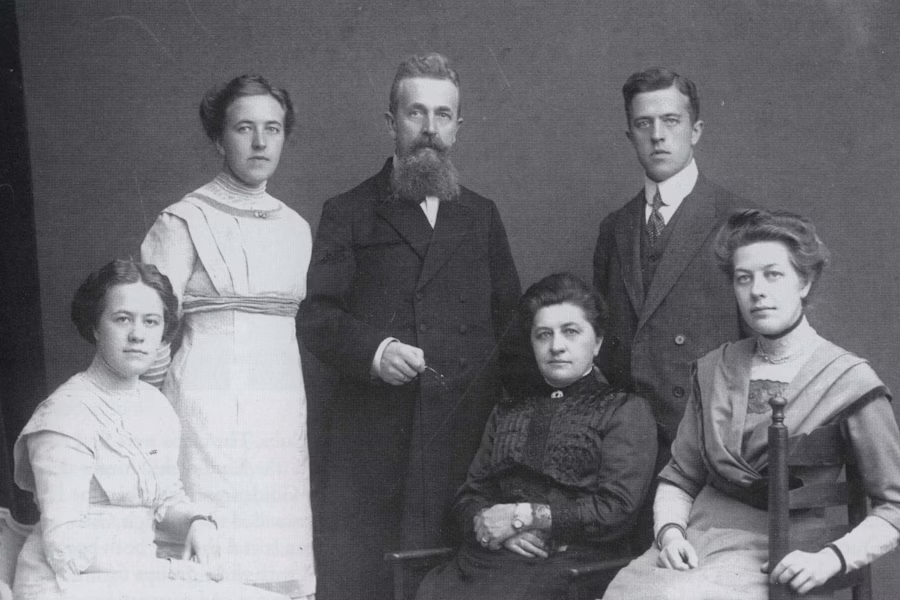
For over two years, the ten Boom home, dubbed “the Beje,” functioned as a secret waystation. Corrie, her father Casper, and her sister Betsie coordinated with the Dutch underground, sheltering refugees and helping them escape. They lived in a state of perpetual, nerve-fraying vigilance. Every knock could be the Gestapo.
The psychological and moral weight of this operation is almost unimaginable. It required a double life: the cheerful watchmaker by day, the resistance operative by night. It demanded constant creativity fabricating false IDs, diverting ration coupons, inventing cover stories. Most of all, it required a fortitude built not on the promise of success, but on the conviction of rightness. They knew the likely cost. When her frail, 84-year-old father, Casper, was asked if he knew he could die for helping Jews, he replied, “It would be an honor to give my life for God’s ancient people.”
They were building a legacy in real-time, brick by moral brick, knowing the invoice might be their lives. This is the essence of “donation over duration.” Casper ten Boom would indeed die in prison, just ten days after his arrest. Betsie would perish in Ravensbrück. Corrie would survive, but only after witnessing the depths of human cruelty.
In our modern professional lives, we are rarely asked for such ultimate sacrifices. But we are asked, daily, to build “hidden rooms” of a different kind. These are the intangible spaces we create:
- The Hidden Room of Psychological Safety: Where a team member can admit a failure without fear of humiliation.
- The Hidden Room of Radical Candor: Where hard truths are spoken with compassion, not for scoring points, but for fostering growth.
- The Hidden Room of Inclusion: Where the quietest voice is actively sought out and amplified.
- The Hidden Room of Ethical Refuge: Where one can say, “This data request feels wrong,” or “This marketing tactic is exploitative,” and be heard.
These rooms aren’t built with lumber, but with language, with action, and with conscious, consistent choice. They are the architecture of a healthy, humane culture. As leaders or colleagues, our legacy will be measured by how many of these rooms we built, and who found safety inside them.
The Camp: Where Donation is Refined in Fire
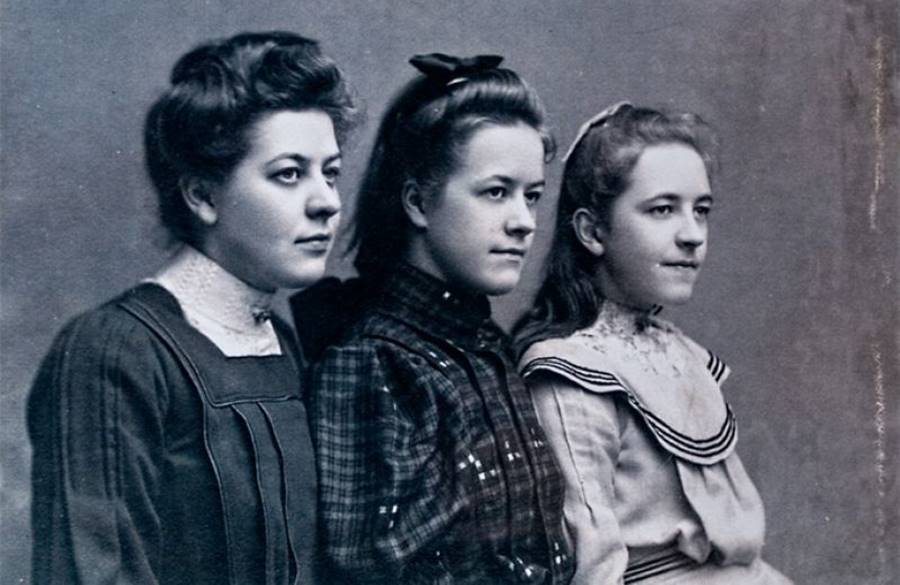
In February 1944, the ten Booms were betrayed. The Gestapo raided the Beje. Although they found the hidden room empty (saving the six people inside after a miraculous 47-hour standoff), they arrested the family. Corrie and Betsie were eventually transported to Ravensbrück, a women’s extermination camp.
Here, in the kingdom of death, the concept of “donation” was stripped to its barest, most brutal form. There was no food to give, no medicine, no comfort. All Corrie had left was her spirit, her faith, and her sister. And Betsie, even as her body failed, insisted on donating hope. She would whisper to Corrie about the beautiful mansion they would build after the war to help those broken by it. She would lead covert prayer meetings in the overcrowded, flea-ridden barracks, thanking God for the fleas because they kept the guards away. (They later learned this was literally true.)
Betsie’s death in Ravensbrück was the ultimate donation. Her final words to Corrie were an instruction: to tell the world that love is stronger than hate, that forgiveness is possible. Corrie was released due to a “clerical error” just days after—a twist of fate she believed was divine intervention. She emerged alone, physically broken, carrying the weight of unspeakable grief and her sister’s charge.
This is the crucible. Many of us will face our own “camps” periods of professional failure, betrayal, burnout, or personal tragedy that strip us down to our core. It is in these pits that our philosophy of “donation” is tested. Do we become bitter, closed off, and self-protective? Or do we, like Corrie and Betsie, find a way to donate the last currency we have: our perspective, our empathy, our decision to not let the darkness win? The resilience forged in suffering is the most durable kind, and it becomes the foundation for a legacy that can withstand anything.
The Global Pulpit: The Legacy of Fractured Light
After the war, physically and emotionally shattered, Corrie could have retreated. Instead, at age 53, she began a new, global career. She established rehabilitation homes for survivors of the camps and for the very collaborators who had enabled the Nazi regime. She traveled to over 60 countries for three decades, becoming a “tramp for the Lord.”
Her message was not one of triumphalism, but of painful, practical grace. The most famous test of this came when, after a speech in Munich in 1947, a man approached her. She recognized him instantly: one of the most cruel guards from Ravensbrück. He told her he had become a Christian and, with extended hand, asked for her forgiveness.
“It could not have been many seconds that he stood there hand held out but to me it seemed hours as I wrestled with the most difficult thing I had ever had to do,” she wrote. The memory of Betsie’s frail, starved body flashed before her. She felt nothing but a cold, righteous rage. She knew forgiveness was not an emotion, but an act of the will. “Jesus, help me!” she prayed silently. “I can lift my hand. I can do that much. You supply the feeling.”
As she mechanically took his hand, a current of healing warmth shot through her. “I forgive you, brother,” she said. “With all my heart.”
This moment is the atomic core of her legacy. It moves the concept of “donation” from the physical (safety, food, shelter) to the transcendent: the donation of forgiveness. In a professional context, this translates to the donation of second chances, the donation of assuming good intent after a conflict, the donation of letting go of grievances that poison teams. It is the hardest, most transformative donation we can ever make. It breaks the endless cycle of resentment and builds something new in its place.
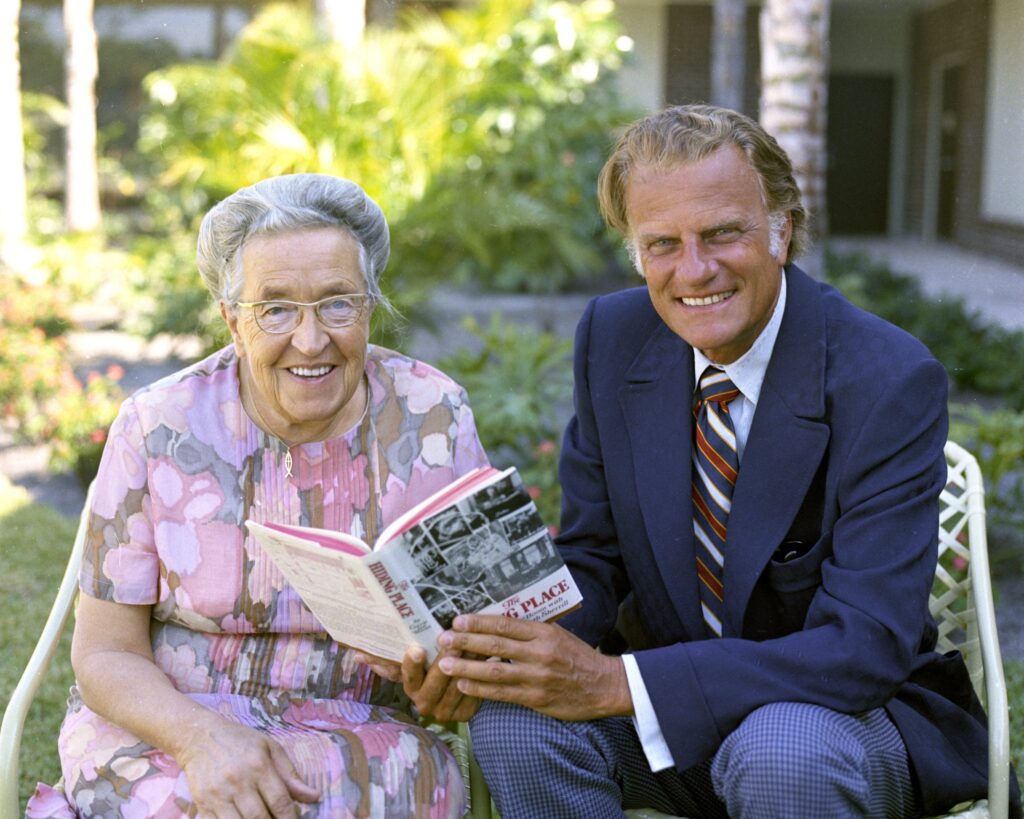
Corrie’s life after the war was a marathon of donation. She donated her story in her bestselling book, The Hiding Place. She donated her presence to the broken and the guilty. She donated her hard-won peace to a world still racked by conflict. She lived until 1983, but she truly lived in the relentless, purposeful donation of every day she was given.
Building Your Hidden Room: A Practical Legacy
So, how do we translate this staggering legacy into our daily, often mundane, professional lives? We are not being asked to hide refugees (though the principle stands if we are). We are being asked to build a legacy of donation in our own spheres.
1. Audit Your “Bench.” What skills, influence, and resources do you have? Your platform, your listening ear, your budgetary authority, your mentorship capacity? See them not just as career assets, but as tools for human donation.
2. Designate “Hidden Room” Time. Intentionally carve out time for the donations that won’t show up on a performance review: coaching a junior colleague, reconciling a strained relationship on your team, volunteering your professional skills for a non-profit.
3. Practice Forensic Forgiveness. When wronged professionally, separate the emotion from the act. Decide what needs to be addressed for health (a boundary, a clarification) and what needs to be released for your own freedom. The donation of forgiven debt emotional or otherwise liberates the forgiver as much as the forgiven.
4. Embrace the “Betsie Principle.” In your darkest professional moment a project failed, a promotion denied ask: “What can I learn here that I can later donate to others?” Transform your pain into someone else’s guidepost.
5. Measure by Donation, Not Tenure. At the end of the quarter, the year, the career, ask not just “What did I achieve?” but “What did I donate? Whom did I protect? Whom did I empower? What grace did I extend?”
Corrie ten Boom’s story pulls us out of the shallow waters of careerism and into the deep ocean of purpose. Her hidden room in Haarlem stands as a permanent monument to a simple, terrifying, glorious truth: that a single life, rooted in conviction and activated by love, can become a hiding place for hope in a world gone mad.
She was a watchmaker. She understood that a legacy is built not in the loud, sweeping strokes of a clock’s hour hand, but in the millions of tiny, faithful ticks of the second hand each one a choice, a prayer, a small act of courage. Each one a donation.
The measure of your life, your career, your leadership, is being written in these ticks. What will you donate with this one?
In memory of Corrie, Betsie, and Casper ten Boom, and the thousands of lights they helped keep shining in the deepest dark.